-
A cotton fleece spec that blocks all-over print
-
Put the decoration method on the first RFQ
-
What DTG, DTF and all-over print each accept
-
Write the fabric line as a testable spec
-
Catch the mismatch on the file, not the sample
-
Sign off the sample with a written record
-
What I check on a supplier BOM first
-
Where the reference guide stops and the supplier answers
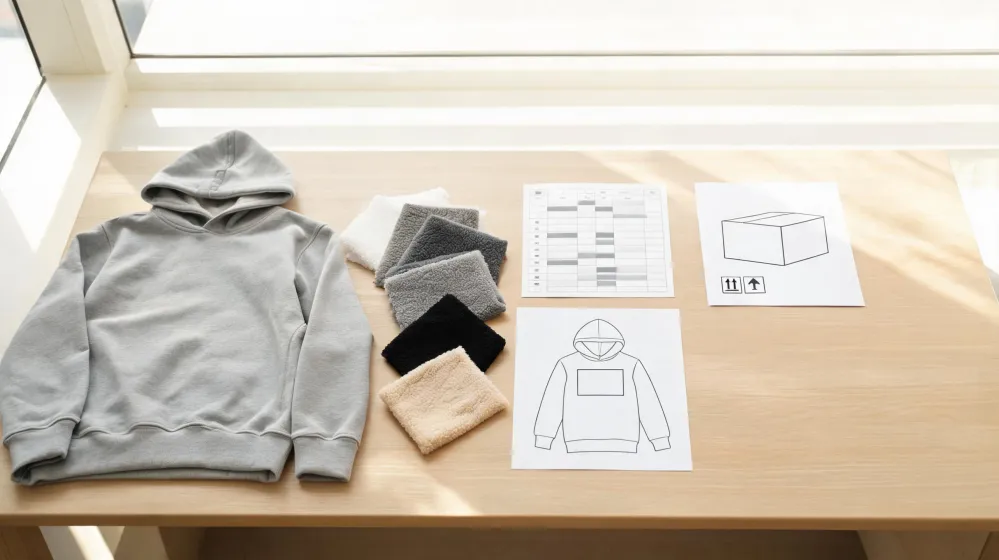
The RFQs in my inbox usually arrive fabric-first: fiber content, hand-feel, a weight target, a style number copied from an old program, and nothing about how the graphic gets onto the chest. The decoration method gets left to the factory or to a later email. The price that comes back is attached to a blank nobody checked against the route the design needs, and the correction lands at sample stage, after artwork time and after the buyer has promised a date to their own customer.
The first thing I ask for on a hoodie inquiry is the method, not the fleece. One manufacturer's custom hoodie guidance, covering its own selected styles on a stored US page rather than the whole trade, treats direct-to-garment as working best on pure cotton and blends, lists fleece, polyester, cotton and nylon as what direct-to-film is available for, and says all-over print uses durable polyester and cotton blend fabrics. Method first, then fiber content, then price.
A cotton fleece spec that blocks all-over print
Fix a cotton-only fleece before anyone names the decoration method and the spec has already made a decision nobody argued for. All-over print runs the design across the garment rather than a chest patch, and that route is described running on polyester and cotton blend fabrics. Order cotton-only and the all-over option is gone, whatever the artwork looks like on screen.
Suppose a buyer builds a program on a cotton-led fleece she has run before, puts a deposit against it, and only then asks for full-coverage print. Two exits remain: change the fabric or change the method. Both land after the timeline was quoted and after the print file was built for a different surface. The money is not the interesting part; nobody at the table had written down which route the blank was being bought to carry.
I would rather spend a day naming the method than spend a sample round proving it.
Put the decoration method on the first RFQ
A quote can only be matched to a fabric if the RFQ carries something to match on. Six fields do most of the work, and each one changes what comes back.
Name the method — DTG, DTF or all-over print — spelled out rather than implied by a reference photo, so the supplier answers with a compatible blank instead of a generic one from stock. Name placement and coverage area, because coverage decides whether the method is applicable to the panels involved. Attach the style number the fabric belongs to, so the fiber line and the blank stay tied to one garment.
State the fiber content you intend, even loosely, so a conflict gets flagged instead of quietly substituted. Ask whether decoration is in-house or subcontracted; that answer tells you who owns the compatibility question when a sample comes back wrong. Say what the sample is meant to prove — color on a mid-weight fleece, registration across a seam, coverage on a brushed face — because a sample with no stated purpose gets approved on feel.
What DTG, DTF and all-over print each accept
Direct-to-garment jets ink into the fabric itself rather than onto a film. For that route the guidance says pure cotton and blends work best: a preference, with a ranking baked in. Cotton is the friendly one here; blends come along for the ride.
Direct-to-film prints to a film first and heat-transfers it onto the garment, and the wording shifts. DTF is described as available for fleece, polyester, cotton, and nylon garments. Available for is not works best on. It lists what the route will accept rather than which fiber it prefers, and the list is wider.
All-over print gets a third phrasing: durable polyester and cotton blend fabrics are what that route uses. That reads as a description of the house blank the route runs on, not a fiber ranking for the market. Durable there is the manufacturer's word about its own fabric, not a test result to carry into a spec.
Read side by side, the three lines are pitched at different strengths of claim, and a quote should not be read as though all three routes ranked fibers on one scale. A supplier who says the shop can print anything has answered a different question.
Write the fabric line as a testable spec
Blend is the word that causes trouble, because the guidance uses it without proportions. A BOM line reading cotton blend tells a mill almost nothing and a printer less. The line should carry fiber composition with percentages, the construction — french terry, brushed-back fleece or loopback — the face character the design depends on, the style number, and the decoration method the fabric is bought to carry.
A tighter line narrows the supplier pool, and a narrower pool can quote higher. That is the cost of a spec that survives sampling; a looser line is cheaper up front and gets paid for in extra sample rounds.
Hand that line to two suppliers and compare the garments they describe back to you. That is the only test of whether the spec is written or merely worded. Treat the format as a shape to copy, not a clause anyone is obliged to accept.
Catch the mismatch on the file, not the sample
The cheapest place to catch a decoration mismatch is a print file laid over panel shapes, before anything is cut. Imagine the routine in order: drop the artwork onto the real pattern pieces rather than a flat mockup, so chest panel, hood, sleeve and pocket sit at true proportions.
Then mark where ink is asked to cross a seam, run over a pocket edge, sit beside a drawcord channel or land on a high-loft brushed face. Each of those is a place where the chosen method is being asked to print a surface the guidance does not name for it. Annotate the file with the method and send it out with the RFQ.
Each check buys something. Coverage across seams separates a chest job from an all-over job before quoting. Marking the brushed face forces an answer about whether the design sits on that side at all. An annotated file turns a general inquiry into a question with a location attached, which a supplier can settle in one reply.
I check the print file against the panel shapes before a sample request goes out, and what turns up is usually a seam or a pocket edge carrying ink nobody quoted for. File-level catch, no test involved.
Sign off the sample with a written record
A sample that passes with no record is a sample that gets argued about six months later. The record needs the style number, the decoration method as actually applied rather than as requested, the fiber content of the blank that was sampled, placement and coverage, a photograph of the approved piece, and the name of whoever signed.
Add what was waived. If the sleeve print was skipped or the color on a darker face was accepted, write it down with a date. Then a production run gets compared against an approved state instead of someone's memory of one.
What I write down is the method and the fiber, not the word approved. Approved is a verdict with no content; method plus fiber is a description a shipment can be matched against. The record also keeps the sample in its lane: it says the decoration sat on that blank and looked the way both sides agreed, and nothing about how it will wear or hold color over a season.
What I check on a supplier BOM first
I check whether the decoration method appears anywhere next to the fabric line, and on most supplier BOMs it does not. The document describes the garment while the print lives in a separate conversation, which is how a compatible blank and an incompatible method end up on one purchase order.
I noticed that blend often stands in for a composition. A BOM copying the word without percentages has borrowed the vocabulary and none of the specification.
I found, on more than one supplier file, that the decoration route was subcontracted and not mentioned at all, so the party answering the compatibility question was not the party on the document. Each gap becomes one written question: which method is this composition bought to carry, what percentages sit behind blend, and who applies the decoration under whose specification.
Where the reference guide stops and the supplier answers
The guidance covers one manufacturer's custom hoodie options on its own selected styles, on a stored US page. It cannot say what a mill's actual blend will do, and it cannot supply a quote, a minimum order, capacity, a lead time or a certification for your order. Those come from a candidate supplier, in writing, per style.
Three questions belong in that exchange. Which decoration method will the proposed composition carry, named against the fiber line rather than in a brochure. Who applies the decoration, in-house or third party, against which artwork file. What the sample will be judged on, so approval means a stated set of conditions rather than an impression. Whether a specific blend takes a specific method is a sampling and testing question, and no reference page settles it.
The buyer at the top of this piece sends her next RFQ differently: one line per style with decoration method, placement and coverage, intended fiber content, style number, and a request that the supplier confirm in writing which method the proposed blend will carry. If the reply never names the method against the fiber, that is the answer. The order waits; the sample does not go out on a guess.
