Factory matching / specification desk
Custom embroidered hoodies with a controlled sourcing scope
Convert artwork and a garment idea into comparable supplier questions. We coordinate buyer-side requirement capture, possible factory matching and quotation review; the factory remains responsible for confirming construction, sample terms, documents and production assumptions.
Submit an embroidered hoodie brief
- Product
- Pullover or zip, hood and pocket construction
- Order
- Pieces by size, color and decoration
- Destination
- US receiving point and quoted freight basis
Responsibility matrix
Separate buyer inputs, coordination and factory confirmation
| Buyer inputs | Sourcing support | Supplier-confirmed outputs |
|---|---|---|
| Fiber content, knit or fleece structure, target gsm and acceptable alternatives | Issue one requirement revision and flag proposed substitutions as separate options | Actual fiber percentages, fabric reference, weight basis and construction |
| US size range, measurement points and quantities by size and color | Normalize size charts and request the same measurement condition from candidates | Garment measurements, proposed tolerances, grading and shrinkage information available for the item |
| Artwork file, thread colors, dimensions, placement and approval owner | Compare proof, setup, decorated sample and repeat-order charge scope | Embroidery method, stitch interpretation, placement limits and sample revision |
| Piece count, labeling, fold, individual pack, carton and destination needs | Align unit basis, exclusions, trade terms and destination assumptions | MOQ by variant, carton data, production assumption and freight scope |
Factory matching is not an audit result. If social compliance records, material test documents, inspection or other evidence is required, define the exact request, issuer, product scope, validity date and responsible reviewer. A supplier profile or certificate image that does not link to the proposed hoodie remains background information.
A sample is also limited evidence. A blank reference can answer questions about fabric hand or construction but cannot approve embroidery stiffness, placement, sewn labels or the finished pack. Name the sample revision and write the unresolved attributes beside it.
Stop the comparison when these gaps appear
“Heavy cotton hoodie” is not a measurable fabric brief. Ask for fiber percentages, fabric construction, gsm basis and any brushed or unbrushed finish. If an alternative blend is offered, keep it as a separate quotation row.
A quote for 100 cartons cannot be compared with 2,000 pieces until pieces per carton and the size-color ratio are known. Record minimum quantities by color, size and decoration where the supplier applies them.
A blank garment price may omit digitizing, embroidery, proofing, neck labels, individual packing or sample freight. Ask every supplier to mark included, excluded and unresolved lines rather than inferring a total.
Budget discussion can start before live prices exist. A lower target may require different fabric weight, simpler decoration, fewer colorways or consolidated packing; show every proposed trade-off for buyer approval instead of describing it as guaranteed savings.
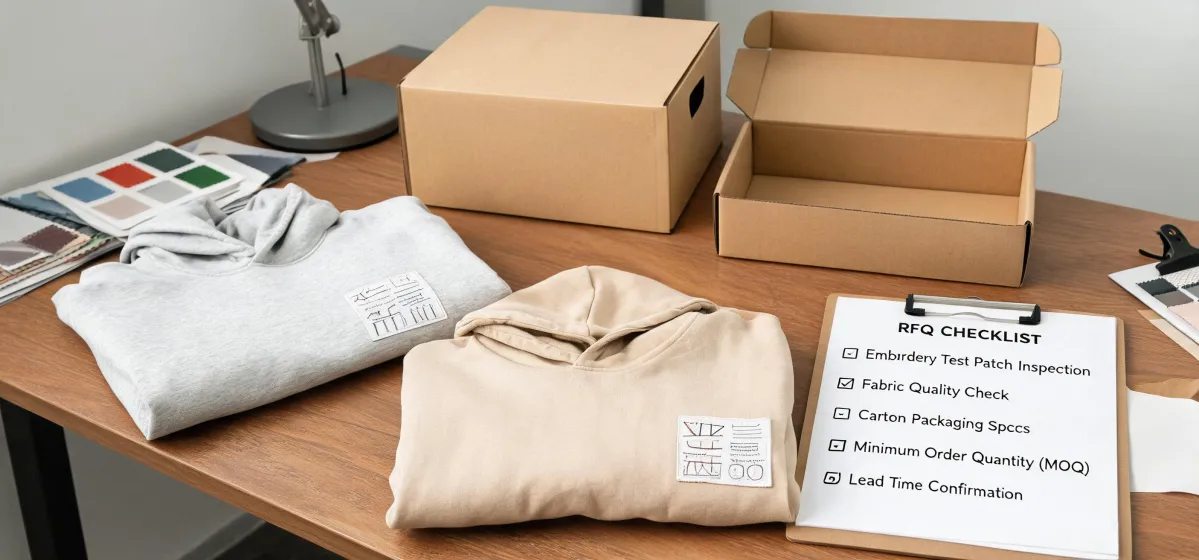
Request supplier responses against one embroidery brief
Share garment construction, fiber and gsm, US sizes, quantities by color, embroidery artwork and placement, label and packing needs, destination and target timing. Availability, MOQ, samples, production timing and documents require supplier confirmation. The comparison matrix helps keep each answer on the same scope.